The Shift Every Parent Is Quietly Feeling

There was a time when choosing a school felt simpler.

You looked at results. You asked about discipline. You checked how many distinctions the school produced. And somewhere in that process, you felt reassured that you had made the “right” decision.

But parents today are asking different questions.

Not always out loud.
But quietly, in their own moments.

Will my child feel confident here?
Will they be understood?
Will they be prepared for a world that even I do not fully understand?

Because the truth is, the world our children are growing into is very different from the one we were prepared for.

And education, slowly but surely, is beginning to reflect that shift.

From Fitting In to Being Understood

For decades, children were expected to adjust themselves to the system.

If they were too slow, they had to catch up.
If they were too curious, they had to stay within limits.
If they struggled, they were often labelled before they were understood.

What is changing now is not just the structure of education, but its intention.

There is a growing recognition that children are not meant to fit into a mould. They are meant to be understood within their own individuality.

Classrooms are beginning to move away from uniform expectations and towards flexible pathways. A child who needs more time is no longer seen as “behind.” A child who thinks differently is no longer seen as “difficult.”

Instead, they are seen.

And when a child feels seen, something shifts internally.
They stop resisting learning.
They begin engaging with it.

For parents, this is often the first sign that they have chosen the right environment, not because the system is perfect, but because it is responsive.

Learning Is No Longer About Remembering

If you ask most adults what they remember from school, the answer is rarely a chapter or a definition.

It is a moment. A teacher. A feeling.

Education in 2026 is beginning to move closer to that reality.

There is less emphasis on memorising information and more focus on understanding, questioning, and applying it. Children are being encouraged to think, not just respond.

And this shift is important, because the future will not reward those who can repeat information. It will reward those who can interpret it, challenge it, and build something new from it.

You may notice your child asking more questions than before.
You may notice them disagreeing sometimes.
You may even feel that learning looks less “structured” than it used to.

But underneath that, something far more valuable is developing: independent thinking.

Technology Is Present, But Not in the Way We Feared

Many parents once worried that technology would take over learning.

In some ways, it has become an integral part of it. But not in the way we imagined.

It is no longer about replacing teachers or books. It is about expanding access, enhancing engagement, and connecting learning to the real world.

Children collaborate, explore, and create using tools that feel natural to them.

At the same time, thoughtful educational environments are becoming more intentional about balance. Because they understand that childhood still needs conversation, reflection, and human connection.

The goal is not to raise children who are dependent on screens.
It is to raise children who can navigate a digital world with awareness and control.

The Emotional Side of Learning Is No Longer Ignored

Perhaps the most powerful shift in education is one that is not always visible in brochures or results.

It is the growing awareness that emotional wellbeing is not separate from learning. It is the foundation of it.

A child who is anxious will hesitate.
A child who feels unheard will withdraw.
A child who feels safe will open up.

Schools are beginning to create spaces where children are not just taught, but supported. Where they can express, regulate, and understand what they are feeling.

This does not mean removing challenges. It means helping children face them with support.

And for parents, this matters more than anything else.

Because long after grades are forgotten, a child’s sense of self stays with them.

A Global Outlook, Without Losing One’s Grounding

There is also a noticeable shift in what parents want from education.

They want opportunities for their children that go beyond borders. They want them to be confident, articulate, and globally aware.

This is why international curricula, particularly Cambridge programmes, continue to gain relevance.

But alongside that, there is a growing awareness that exposure should not come at the cost of identity.

Children need to understand the world, but they also need to understand themselves within it.

This balance is delicate, yet essential.

Schools like Schola Nova are working towards creating this balance, where international standards meet a strong sense of belonging.

Because confidence is not just about competing globally.
It is about standing firmly in who you are.

Learning Is Becoming an Experience, Not Just a Process

If you observe classrooms today, you will notice something different.

Children are not just sitting and listening. They are participating, discussing, building, and presenting.

Learning is becoming more experiential.

And this matters because children remember what they experience far more than what they are told.

When they work on projects, solve real problems, or collaborate with peers, they are not just learning content. They are developing life skills.

Communication.
Teamwork.
Confidence.

These are not taught through lectures. They are developed through experience.

Parents Are No Longer on the Outside

Another subtle but important shift is the role of parents.

There was a time when parents were expected to step back once a child entered school.

Now, they are being invited in.

Not physically, but through communication, collaboration, and shared responsibility.

Schools are building stronger connections with parents, not just to inform them, but to involve them.

Because education does not end when the school day does. It continues at home, in conversations, in values, and in everyday interactions.

And when there is alignment between school and home, children feel it.

They feel supported.
They feel secure.
They feel consistent.

Preparing for a Future That Has No Fixed Shape

Perhaps the most uncertain aspect of parenting today is the future.

We cannot predict what careers will look like. We cannot define a single path to success.

And so, education is shifting from preparing children for a specific destination to preparing them for adaptability.

They are being exposed to new areas, encouraged to explore interests, and supported in developing a mindset that is open and resilient.

This does not eliminate uncertainty.
But it equips children to navigate it.

So What Does This Mean for You as a Parent?

It means that choosing a school is no longer about finding the “best” one in a traditional sense.

It is about finding the right fit.

A place where your child is not just taught, but understood.
Where they are not just guided, but heard.
Where they are not just prepared for exams, but prepared for life.

This requires slowing down the decision.

Looking beyond results.
Observing environments.
Trusting your instinct when you walk into a space.

Because as a parent, you often know.

You can sense whether your child will belong there.

A Quiet Closing Thought

Education in 2026 is not loud.

It is not always about big achievements or visible outcomes.

Sometimes, it is much quieter than that.

It is a child raising their hand when they once stayed silent.
It is a child trying again after failing.
It is a child walking into school without fear.

Schools like Schola Nova are part of this evolving landscape, where education is not just about performance, but about growth.

And perhaps that is what matters most.

Because in the end, progress is not always visible.

Sometimes, it is simply a child becoming more of themselves, one day at a time.
 

Future of Education: What Schools Will Look Like in the Next 10 Years

A Schola Nova Perspective on Learning, Growth, and the Child of Tomorrow

 There was a time when school meant rows of desks, a chalkboard at the front, and a quiet expectation to listen, memorise, and repeat. For many of us, that is the image we still carry. But if we pause and observe the world around us today, it becomes clear that education is gently, yet powerfully, transforming.

When parents now ask about the future of education and what schools will look like in the next 10 years, the question carries a deeper concern. It is not just about academics anymore. It is about readiness for life, adaptability, emotional strength, and the ability to thrive in an ever-evolving world.

At Schola Nova, we often reflect on this shift not as a distant prediction, but as a responsibility we hold in the present. Because the future of education is not something that will arrive suddenly; it is something we are shaping, day by day, in our classrooms, conversations, and connections with our students.

 From Classrooms to Learning Spaces

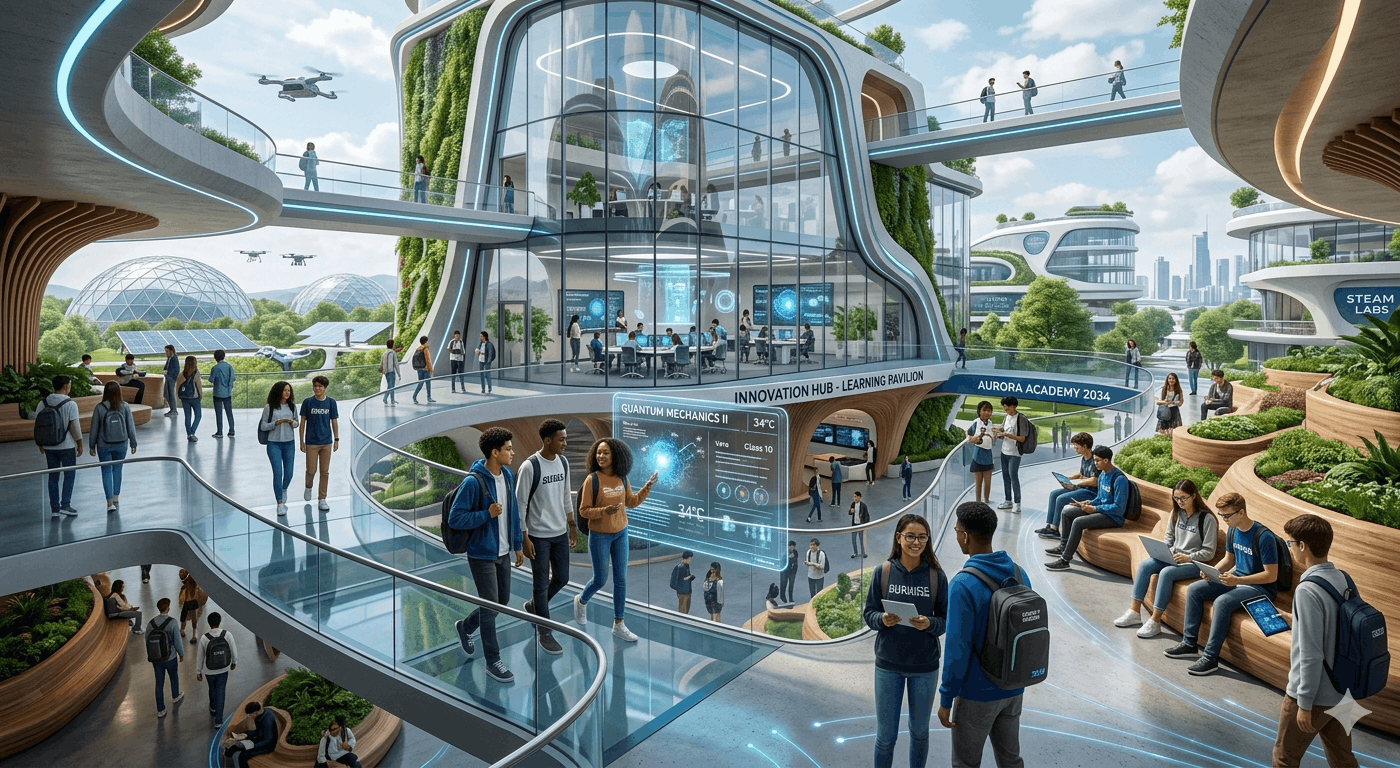
The schools of the future will not feel rigid or confined. Instead, they will feel alive.

Learning spaces will become more flexible, collaborative, and student-centered. The traditional idea of a classroom will expand into an environment where curiosity leads the way. Children will move between discussions, hands-on activities, creative exploration, and independent thinking often within the same lesson.

At Schola Nova, this transition has already begun. We see learning not as a fixed process, but as a journey that adapts to the needs of each child. The classroom is no longer just a place where information is delivered, it is where ideas are discovered, questioned, and shaped.

For parents searching for the best schools in Islamabad, this shift is becoming an important factor. It is no longer about how much a child can memorise, but how deeply they can understand and engage.

Technology as a Natural Extension of Learning

In the next 10 years, technology will not stand out as something “extra” in education. It will quietly integrate into everyday learning.

Students will interact with digital tools, research platforms, and interactive resources in ways that feel seamless and intuitive. Lessons will extend beyond textbooks into visual, experiential, and globally connected formats.

However, what will truly matter is not the presence of technology, but how it is used.

At Schola Nova, we believe that technology should support thinking not replace it. It should open doors, not create dependence. The goal is to help students become thoughtful users of information, not passive consumers.

This balanced approach ensures that while students are prepared for a digital future, they remain grounded in critical thinking, creativity, and human connection.

 The Rise of Personalised Learning

Every child carries a unique way of understanding the world. Some learn by observing, others by doing. Some need time to process, while others thrive in discussion.

The future of education recognises this diversity.

In the coming years, schools will move away from a “one-size-fits-all” model. Instead, learning will become more personalized adapting to each child’s pace, strengths, and areas of growth.

Teachers will no longer simply deliver content; they will guide, observe, and support each learner’s journey.

At Schola Nova, this philosophy is deeply embedded in our approach. We see each student not as part of a system, but as an individual with potential waiting to be understood and nurtured.

For parents exploring modern education in Islamabad, personalised learning is not just a trend, it is a necessity. It is what builds confidence, reduces anxiety, and allows children to truly connect with what they are learning.

From Memorisation to Meaningful Skills

Perhaps the most significant shift in the future of education will be the move from memorisation to application.

Information is no longer scarce. In fact, it is everywhere. What matters now is the ability to interpret, analyse, and use that information effectively.

In the next 10 years, schools will focus more on:

  • Critical thinking
  • Problem solving
  • Communication
  • Collaboration
  • Creativity

These are not just academic skillsthey are life skills.

At Schola Nova, we often remind ourselves that a student’s success is not defined by how much they can recall during an exam, but by how well they can navigate real-life situations with clarity and confidence.

Parents looking for the best schools in Islamabad are increasingly recognising this. They are asking questions beyond grades. They are looking for environments that prepare children for the real world not just the next test.

Blended Learning: The Balance Between Structure and Flexibility

The idea of learning will expand beyond physical boundaries.

Future schools will offer a blend of in-class and online learning experiences. This does not mean replacing traditional education, but enhancing it with flexibility and accessibility.

Students will have opportunities to revisit concepts, explore topics independently, and engage with global resources all while maintaining the structure and discipline of a school environment.

At Schola Nova, we understand that balance is key.

Too much flexibility can feel overwhelming, while too much structure can feel restrictive. The goal is to create a learning experience where students feel supported, yet empowered.

This balanced approach is especially important in today’s world, where adaptability is not just an advantage, it is a requirement.

Emotional Wellbeing at the Heart of Education

One of the most meaningful changes we will see in the future of education is the prioritisation of emotional wellbeing.

For a long time, education focused primarily on academic outcomes. But we are now beginning to understand that a child’s ability to learn is deeply connected to how they feel.

In the next 10 years, schools will place greater emphasis on:

  • Emotional awareness
  • Stress management
  • Building resilience
  • Healthy relationships
  • Self-confidence

Teachers will play a crucial role not just as educators, but as mentors and guides.

At Schola Nova, we believe that a child who feels safe, understood, and valued is a child who is ready to learn.

This is why creating a supportive environment is not an addition to education, it is its foundation.

For families seeking schools in Islamabad that truly understand their child’s needs, emotional wellbeing is becoming a defining factor.

Global Learning in a Connected World

The world is no longer divided by borders in the way it once was.

Students today are growing up in a globally connected environment, and education must reflect that.

In the future, schools will provide greater exposure to:

  • Diverse cultures and perspectives
  • International curricula such as Cambridge and IGCSE
  • Collaborative projects with students across the world
  • Opportunities that prepare students for global careers

At Schola Nova, this global outlook is an essential part of our vision.

We prepare students not just to succeed locally, but to step confidently into international spaces; academically, professionally, and socially.

For parents searching for the best schools in Islamabad, global exposure is no longer a luxury. It is an important part of preparing children for the opportunities ahead.

The Quiet Power of Values and Character

While much will change in the future of education, some things will remain timeless.

Values. Character. Integrity. Empathy.

These cannot be replaced by technology or taught through textbooks alone. They are developed through experience, guidance, and meaningful relationships.

In the schools of the future, character education will hold as much importance as academic achievement.

At Schola Nova, we often see that the most lasting lessons are not always written in notebooks. They are felt in moments of teamwork, in acts of kindness, in the confidence a child builds over time.

Because in the end, education is not just about shaping minds. It is about shaping individuals.

Choosing the Right School Today

When we talk about the future of education and what schools will look like in the next 10 years, the question naturally leads to another:

What should parents look for in a school today?

The answer lies in alignment.

A school should not only meet present needs but also prepare a child for what lies ahead. It should offer:

  • A balance of academics and skills
  • A nurturing and emotionally safe environment
  • Opportunities for creativity and exploration
  • Exposure to global learning standards
  • A personalised approach to growth

At Schola Nova, we strive to bring these elements together in a way that feels both structured and deeply human.

A Future That Begins Today

The future of education is often described as something exciting, innovative, and full of possibilities and it is.

But more importantly, it is something that is already unfolding.

In classrooms where questions are encouraged.
In teachers who choose to understand rather than instruct.
In students who are learning not just what to think, but how to think.

At Schola Nova, we see this future every day—in the quiet confidence of a child who begins to believe in themselves, in the curiosity that leads to discovery, and in the sense of belonging that makes learning meaningful.

Because ultimately, the goal of education is not just to prepare children for the future.

It is to help them feel ready for it.